

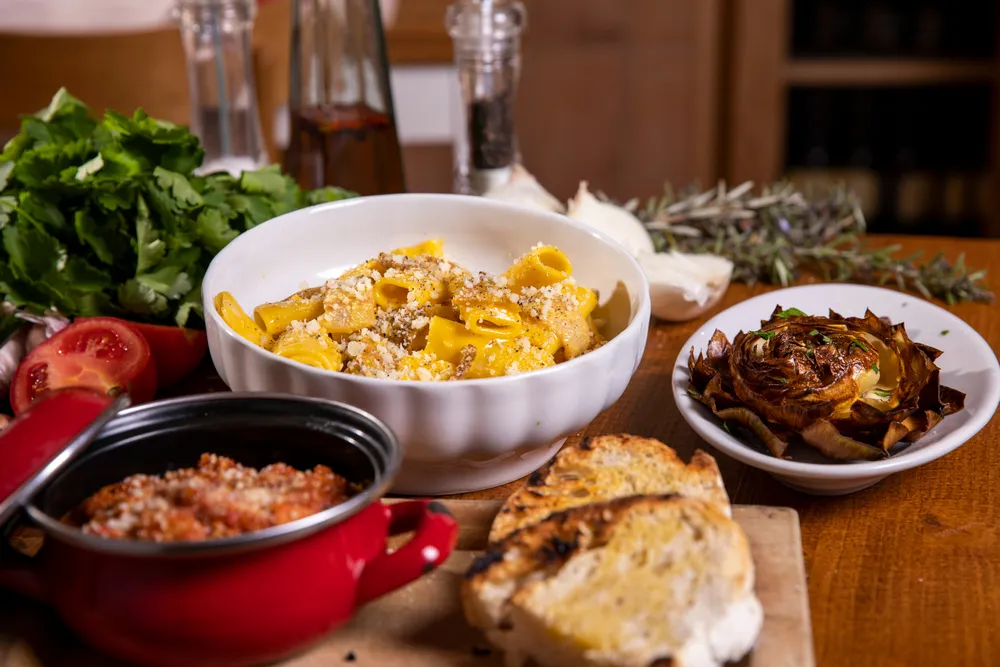
There’s a moment that happens on almost every Monti Food Tour in Rome — usually somewhere between the second and third tasting stop — when a guest takes a bite of something simple, pauses, and says some version of “I had no idea Italian food could taste like this.” I’ve heard that reaction described by guides, by fellow travelers, and honestly, I felt it myself the first time I sat down to a proper plate of cacio e pepe in a trattoria that had no Instagram presence, no English menu, and absolutely no reason to impress anyone except the locals who’d been eating there for decades.
That moment happens because authentic Roman cuisine is genuinely different from what most of the world has been told Italian food is. It’s older, simpler, and in many ways more demanding — because when you cook with four ingredients instead of fourteen, every single one of them has to be right. This guide is built around helping you understand the dishes you’ll encounter on a Monti Food Tour, what makes each one significant, and why tasting them in Monti specifically gives you something you simply cannot replicate anywhere else.
The Four Pasta Dishes That Define Roman Cooking
If you walk away from this blog remembering one thing, let it be this: Roman pasta is its own category. Not better or worse than other Italian regional cooking — just deeply, specifically its own. The four dishes below are the foundation of that tradition, and all four appear in some form across the popular Monti Food Tour experiences offered in the district.
Carbonara — The Most Misunderstood Dish in the World
Let’s get the most important clarification out of the way immediately. Authentic carbonara does not contain cream. It never has. The sauce is built entirely from eggs, aged pecorino romano, finely ground black pepper, and the starchy pasta cooking water — combined with guanciale, which is cured pork cheek, not bacon, and certainly not pancetta. The technique involves removing the pasta from the heat before adding the egg mixture and working quickly to create a coating that is silky and rich without ever scrambling.
Why does this matter? Because the version most of the world has been eating — the one with cream and generic pork — is a fundamentally different dish. When you taste carbonara made properly in the Monti district, by someone who learned the technique from their grandmother, you understand immediately what all the fuss is about. It’s one of those authentic Roman cuisine moments that recalibrates your expectations permanently.
Cacio e Pepe — Simplicity as Mastery
Two ingredients. Aged pecorino romano and freshly cracked black pepper. That’s the entire flavoring of cacio e pepe, and yet it is one of the most technically demanding pasta dishes in the Roman canon. The cheese must be finely grated and added at exactly the right temperature or it clumps. The pepper must be freshly cracked and toasted briefly to unlock its full aroma. The pasta water must be reserved and used judiciously to create a sauce that coats each strand without pooling at the bottom of the bowl.
Every trattoria in the Monti district has their own version, and experienced eaters can detect the differences. On a Monti Food Tour, your guide will often explain what to look for in a good cacio e pepe — the consistency of the sauce, the quality of the cheese, the pasta shape used — turning a simple tasting into a genuine education.
Amatriciana and Gricia — The Dishes Fewer Visitors Know
Amatriciana and Gricia are the other two pillars of the Roman pasta tradition, and they’re significantly less known internationally than carbonara and cacio e pepe, which makes tasting them feel like a genuine discovery. Gricia is often described as the ancestor of both carbonara and amatriciana — guanciale, pecorino, and pepper, served without egg or tomato. It’s the oldest of the four and the one that most directly reflects the shepherding culture of the Lazio region.
Amatriciana adds tomato to that base, creating something that bridges the richness of the pork and cheese with acidity and sweetness. When made with San Marzano tomatoes and quality guanciale, it’s remarkable. Both dishes appear regularly in Monti Food Tour experiences and represent the kind of traditional Roman specialties that rarely make it onto the menus of Italian restaurants abroad.
The Street Food That Romans Have Always Loved
Before pasta became the defining symbol of Roman cooking, the city had a rich street food culture built around quick, satisfying food that people could eat standing up between shifts at the market or heading to work. That culture is very much alive in Monti today, and it’s one of the things that makes a walking food tour here feel so immediate and authentic.
Supplì al telefono are the undisputed kings of Roman street food. These are fried rice balls — risotto cooked with tomato sauce, rolled around a piece of mozzarella, coated in breadcrumbs, and fried until golden. The name comes from the way the melted mozzarella stretches when you pull the supplì apart, like an old telephone cord. They’re best eaten fresh and hot, from the paper bag, standing on the pavement outside the shop that made them. Pizza al taglio — pizza by the square slice — is another essential, and the version you’ll find in Monti is categorically different from the round pizzas most visitors associate with Italian cooking. It’s thicker, softer, sold by weight, and available in combinations that change daily based on what’s seasonal and fresh.
The Dishes That Tell the Deeper Story of Roman Food Culture
Carciofi — The Artichoke as Roman Icon
The Roman artichoke is not a garnish or a side dish. In the Monti district and across Rome’s traditional culinary culture, the artichoke is a seasonal obsession. Two preparations dominate. Carciofi alla romana involves braising the artichoke in olive oil with garlic, mint, and parsley until it’s completely tender — a dish that is gentle and deeply savory all at once. Carciofi alla giudia, the Jewish-Roman preparation, involves flattening the artichoke and frying it until the outer leaves are paper-crisp while the heart remains soft. Both are springtime dishes, and if you’re visiting between March and May, tasting them in Monti is close to mandatory.
The Quinto Quarto — Cooking With Nothing Wasted
The quinto quarto — the fifth quarter — refers to the offal and cheaper cuts that working-class Roman cooks turned into extraordinary dishes out of necessity. Tripe alla romana, braised in tomato sauce with mint and pecorino, is the most accessible entry point. Coda alla vaccinara — oxtail braised slowly with tomatoes, celery, and a touch of chocolate — is one of the great braises of any culinary tradition. These dishes don’t appear on tourist menus because they require a willingness to eat unfamiliar things. They appear on the Monti Food Tour experiences designed for serious eaters, and for those who are open to them, they represent authentic Roman cuisine at its most historically honest.
Dolci Romani — How Romans End a Meal
The Roman approach to dessert is understated by Italian standards — which is saying something. Tiramisu in Rome predates its international fame by decades, and the local version tends to be lighter and less sweet than what you’ll find abroad. Maritozzi — soft, pillowy buns split and filled with unsweetened whipped cream — are the Roman breakfast pastry that has recently caught international attention, though Romans have been eating them since the medieval period. And artisan gelato, when made correctly with natural seasonal ingredients and stored in metal containers rather than plastic tubs, is a different product entirely from the brightly colored tourist-trap versions near the major landmarks. Your Monti Food Tour guide will know exactly where to take you for each.
Four Things That Make Roman Food Unique Compared to Other Italian Regions
- Ingredient restraint as a philosophy. Roman cooking doesn’t add ingredients to solve problems — it refines technique until the fewest possible ingredients produce the best possible result. This is a cultural value, not just a culinary one.
- The centrality of pecorino romano over parmigiano. Outside of Rome, most Italian cooking defaults to parmigiano reggiano. In authentic Roman cuisine and traditional dishes, pecorino romano — sharper, saltier, made from sheep’s milk — is the default, and the difference in flavor is significant.
- Guanciale over pancetta or bacon. The specific fat content and flavor profile of cured pork cheek is genuinely different from other cured pork products, and substituting it changes the character of carbonara and amatriciana fundamentally.
- Seasonal eating taken seriously. Romans don’t eat artichokes in November or porcini mushrooms in April. The seasons shape the menu in ways that serious food travelers find deeply satisfying — and that make every Monti Food Tour experience subtly different depending on when you visit.
Where the Food and the History Intersect
Jewish-Roman Cuisine and Its Place in Monti
The Jewish community has been present in Rome for over two thousand years — longer than in any other city in Europe — and their culinary contributions to Roman food culture are profound. Carciofi alla giudia is the most famous example, but the influence runs much deeper. The tradition of frying vegetables in olive oil, the use of specific spice combinations, the approach to festive sweets — all of these have been woven into what most people simply call “Roman food” without knowing its origins. A knowledgeable Monti Food Tour guide will trace these connections in a way that makes the food taste even more layered.
The Role of the Trattoria in Roman Food Culture
The trattoria is not simply a restaurant. It’s a social institution — a place where the menu changes based on what was at the market that morning, where the owner knows the regulars by name, and where the cooking is done by someone who learned it from their parents. The best trattorias in the Monti district have been operating under the same family for multiple generations, and they represent a direct, unbroken line to the traditional Roman specialties that have defined this city’s table for centuries. Finding these places on your own is genuinely difficult. A food tour guide knows exactly which door to push open.
Why Monti Is the Right Neighborhood for This Education
Monti has managed to preserve its culinary character in a way that few central Rome neighborhoods have. It hasn’t been entirely overtaken by tourist restaurants, and it hasn’t been so thoroughly gentrified that the original food culture has been replaced. The family shops, the market vendors, the wine bars stocking natural Lazio producers — they’re still there, operating alongside the newer cafés and boutiques. That balance is precisely what makes the Monti Food Tour the right vehicle for understanding authentic Roman cuisine in its living, breathing form.
Conclusion
Authentic Roman cuisine is not a museum exhibit. It’s not a reconstruction or a reinterpretation. It’s a living tradition, still practiced daily by people who genuinely believe that the way their grandparents cooked was the right way — and who can prove it in a single bite of properly made carbonara. The Monti Food Tour gives you direct access to that tradition, in the neighborhood where it has always been most alive. Come with curiosity, come with appetite, and let the food tell you its story.